what to expect when using compost in garden
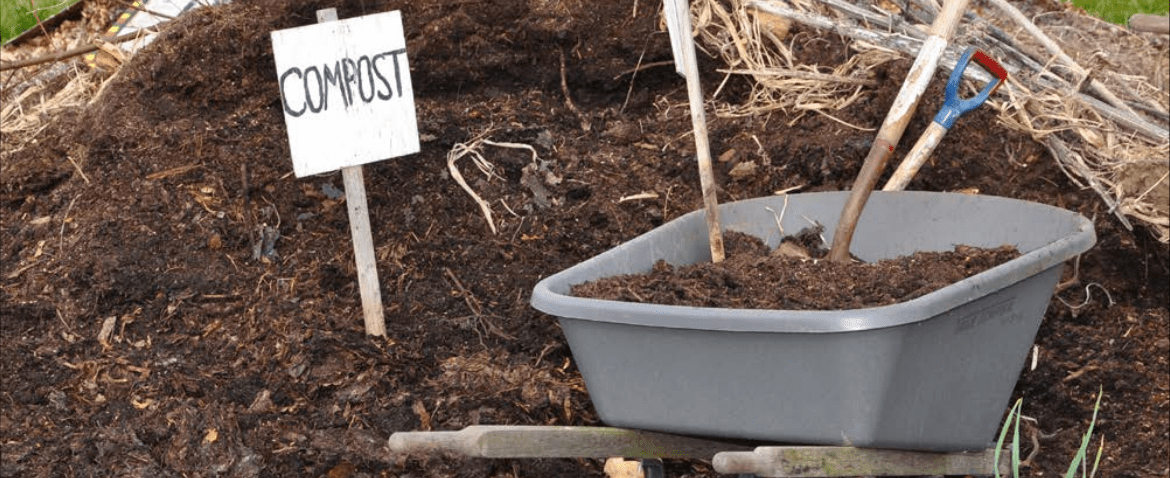
Overview
- Compost is partially broken-down organic textile. You lot tin brand compost at dwelling house or buy compost. Finished compost is bachelor in numberless at plant nurseries and home improvement centers. Yous can also buy compost in bulk from landscape supply companies.
- Compost is a soil amendment. Choose the right type and amount of compost for your project.
- Utilise compost to better soil for planting vegetable gardens, landscape areas and lawns. Calculation compost to your soil improves its ability to take and store h2o. Information technology likewise helps aerate soil.
- Adding compost increases the action of soil organisms. They aid to provide nutrients to your plants over time.
- Compost may not supercede fertilizer. Lawns, vegetables and fruiting trees and shrubs ofttimes demand additional fertilizer to thrive.
- Utilise the correct corporeality of compost to your work site. Adding as well much compost may be harmful, specially in vegetable gardens. You can apply too much compost at one time or over several years. Too much compost in soil stunts plant growth. Information technology as well may create water pollution.
Choose the right compost production for your needs
Purchased compost products vary. Compost is made from a broad range of organic materials. Source materials are often mixed together in the composting process. Compost source materials include:
- Grand debris.
- Forestry products such as sawdust and footing bark.
- Crop residual such as straw, processed mint plant cloth and rice hulls.
- Animate being manures from chicken, cows and other livestock.
- Food scraps from homes and businesses, including wineries and breweries.
- Mushroom production waste material.
- Compost from worms (vermicompost).
Compost quality varies. Quality depends on the blazon of raw materials. It also depends on the compost production method.
How should compost look?
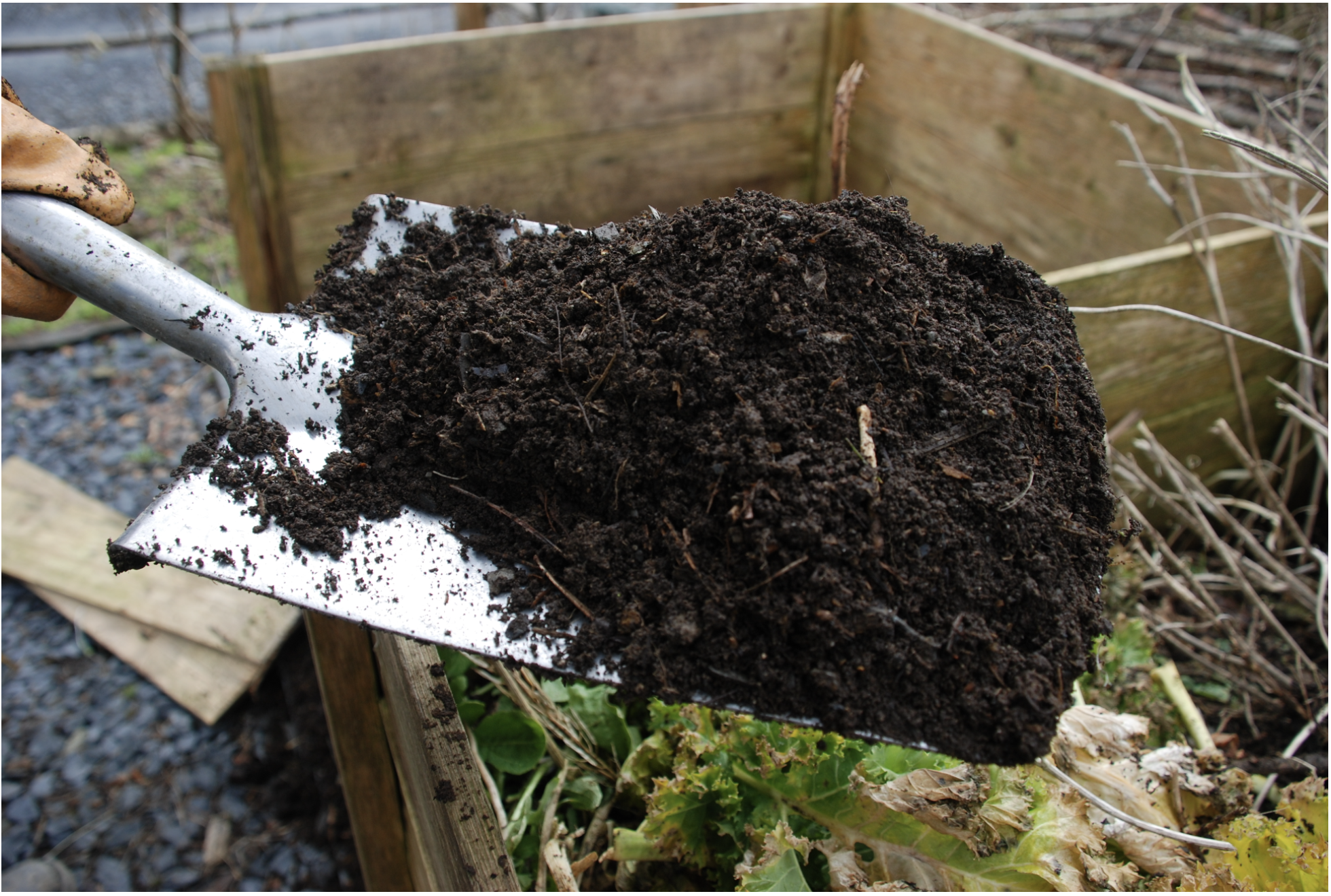
Loftier quality compost should expect similar dark topsoil. It has a light, crumbly structure (Figure 1).
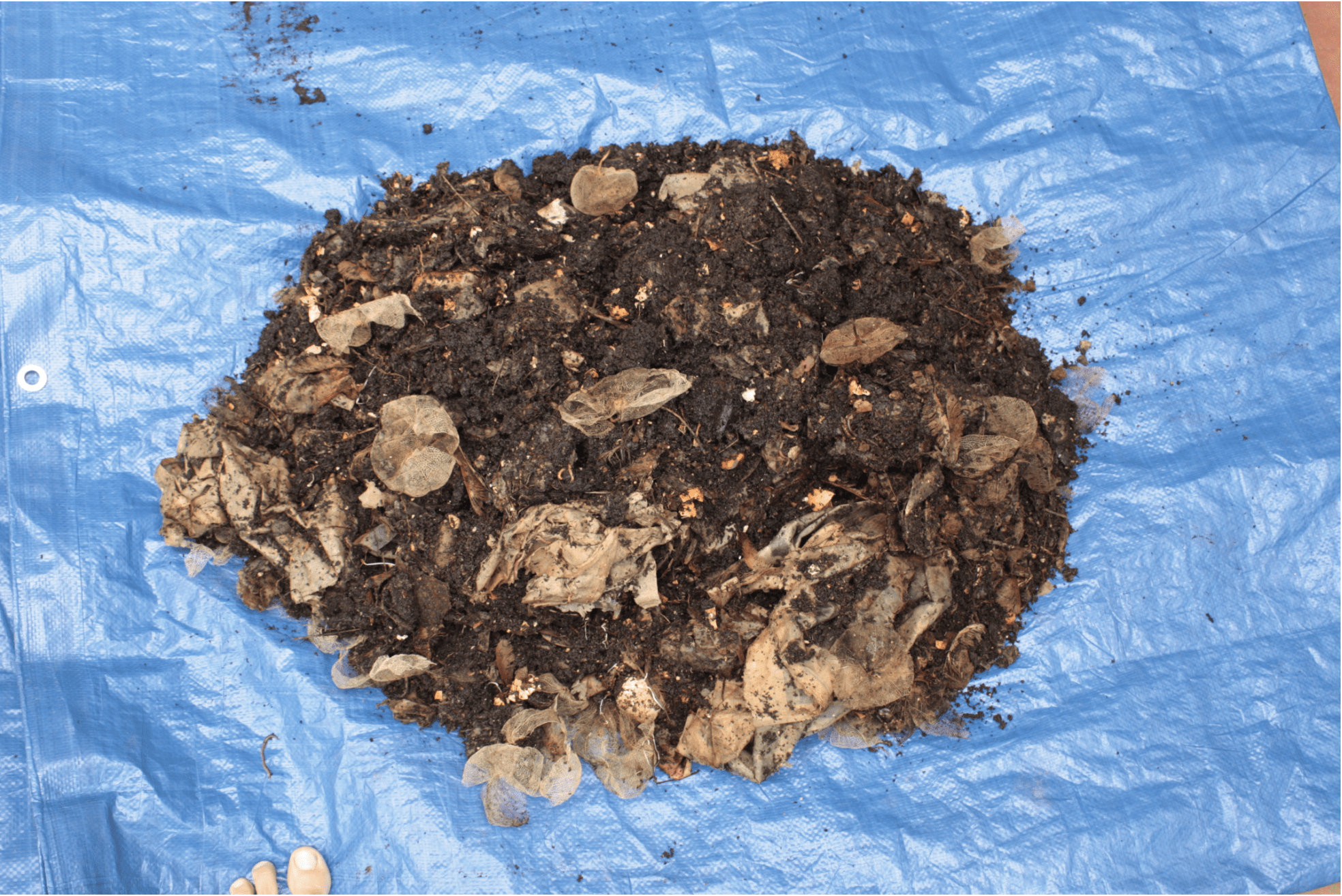
Look for compost that doesn't have big particles. Information technology should pass through a ⅜-inch screen. There shouldn't be any rocks, trash or other debris. The compost in Figure 2 has large pieces that should be removed for vegetable gardens and lawns. Chunky compost is acceptable for landscape areas.
How should compost aroma?
Loftier-quality compost smells earthy like forest soil. Don't purchase compost that has a foul odor or smells like ammonia or sulfur. These smells point that the composting process isn't complete.
Other of import factors about purchased bulk compost
Earlier you purchase bulk compost, inquire the vendor most the product. Enquire most the following factors:
- Does the compost contain weed seeds? How do they know? Consider visiting the site where the compost is stored. Make sure the storage site is not full of weeds.
- What is the wet content of the finished product?
- Wet compost contains greater than 60% moisture content. Wet compost is clumpy and doesn't spread well.
- Dry out compost contains less than xx% moisture content and creates a lot of grit when spread. Dry compost is hard to mix into the soil. The compost tends to stay on the soil surface.
- Ask how the vendor handles herbicide contamination. How do they reduce potential sources of contamination? See Herbicide Contaminated Compost and Soil Mix: What to Know — and What You Should Do About It.
- What are the results of laboratory analysis of the available compost products?
| Holding measured | What to look for in finished compost |
|---|---|
| Organic matter | Greater than thirty% |
| Carbon to nitrogen ratio (C:N) | Below or equal to xxx:one |
| Percent nitrogen | 0.v% to iii.0% |
| Percent phosphorus | Greater than 0.two% |
| pH (scale of acid to base, 7.0 is neutral) | 6.0–8.0 |
| Metals | Meets state and federal bureau standards |
| Soluble salts | Finished composts fabricated from mushroom and manure sources may have high soluble salts. Salts from compost can harm vegetable seeds and transplants and lawn seed. Soluble salts from compost can also damage sensitive plants such as blueberries. |
How much compost should you buy?
Get the right amount of compost for your job.
- Determine the volume you need. Volume is the thickness of your compost layer multiplied by the area or your workspace.
- What is the surface area of the space where yous will apply compost? Calculate the surface area in square feet. Multiply the length in feet by the width in feet, resulting in square feet.
- How thick is the compost layer? Catechumen inches to feet. For example, three inches deep equals 0.25 anxiety.
- Calculate the book of compost needed. Multiply the surface surface area by the thickness of the compost layer to get the volume in cubic anxiety. For example, 10 anxiety long past 10 feet wide by 0.25 feet thick equals 25 cubic feet of compost needed.
If these calculations seem daunting, use an online compost calculator to determine how much compost yous'll need.
Compost in bags
Numberless of purchased compost oft contain 1-2 cubic feet of fabric.
Utilize bagged compost for smaller jobs.
For vegetable gardening, a unmarried 1-cubic foot handbag of compost covers 12 square feet of expanse to a depth of one inch. That's the largest amount of compost to add together each twelvemonth for existing vegetable areas.
For new vegetable and landscape beds, a single 1-cubic human foot bag of compost will cover an area two.five anxiety long 10 two.5 feet wide (5 square anxiety) with two.four inches of compost.
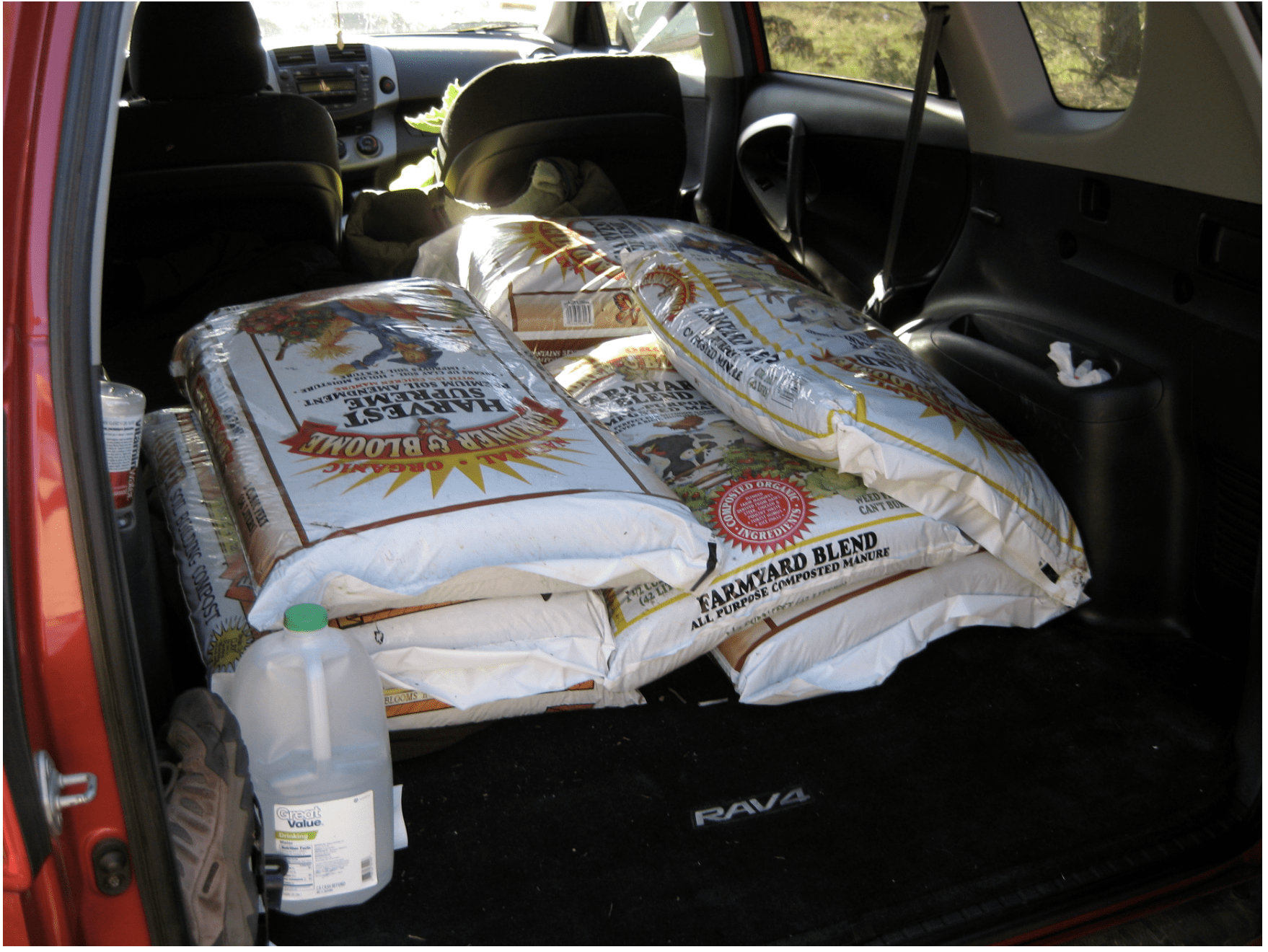
It's applied to buy compost in bags up to a point in terms of cost and endeavor. For example, to cover 100 square anxiety of area with compost 3 inches deep, it would take 25 1-cubic foot numberless. For this amount of compost, consider purchasing information technology in majority and paying for commitment.
Compost in bulk
Bulk compost comes in increments of cubic yards. One cubic yard equals 27 cubic feet of material. For larger jobs, you can buy 1–2 cubic yards of compost.
Bulk compost deliveries are based on a flat fee, not on the amount delivered.
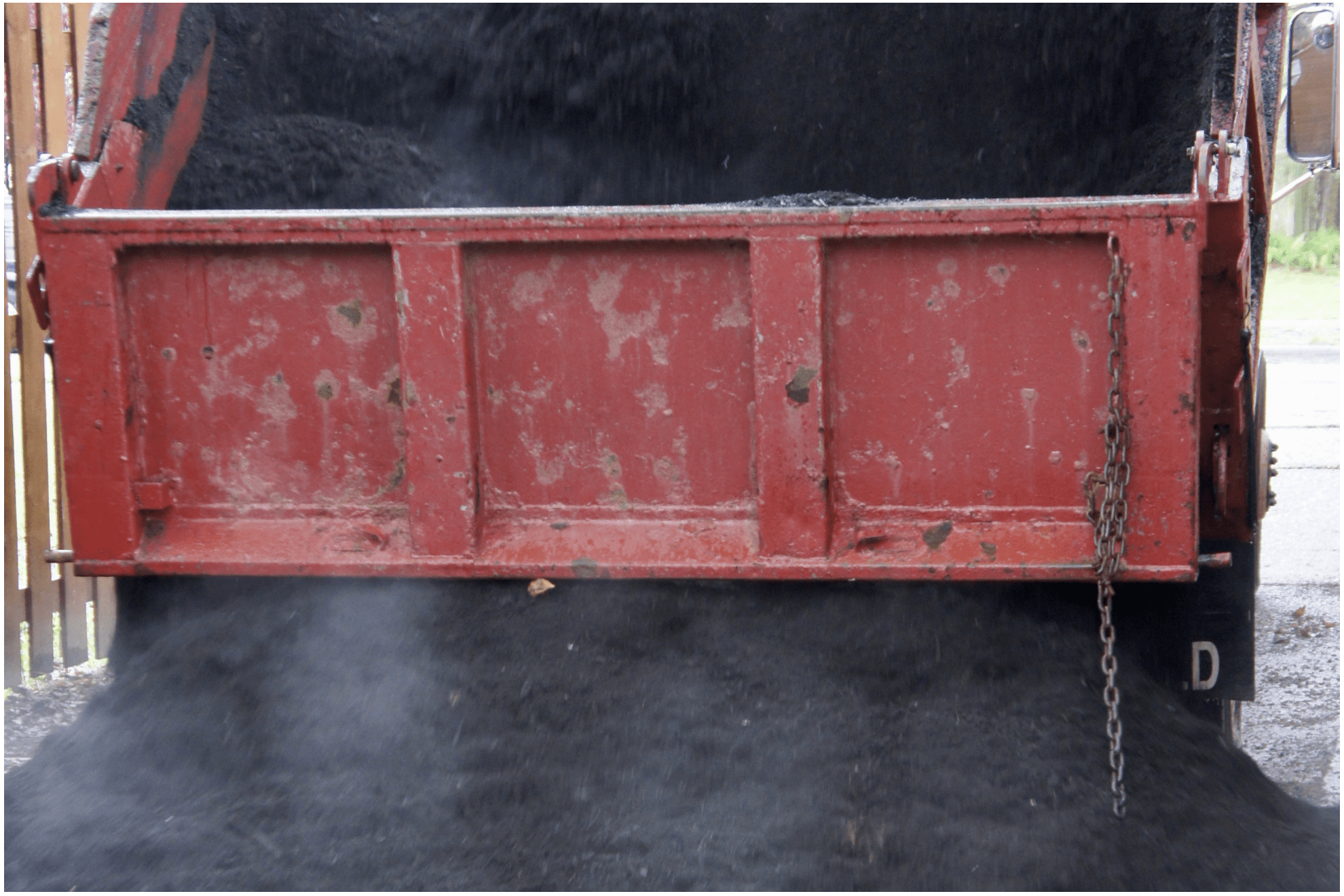
People oft buy bulk compost in units of 7.5 cubic yards. Figure 4 shows a unit of measurement of compost beingness delivered.
Consider using a total unit of compost for larger jobs. For example, 7.five cubic yards of compost covers an 800-square-foot area about three inches deep.
This example shows the correct volume of compost to amend a larger area for a new vegetable growing area or mural bed.
How to apply compost
Vegetable gardens
For new vegetable beds, add 3–4 inches of compost. For existing vegetable beds, add together 1-quarter to one inch of compost per year.
After y'all spread the right amount of compost, follow these steps.
- Add amendments such as lime and Northward-P-K fertilizer equally needed.
- Incorporate the materials into the superlative 8–12 inches with a digging fork or spade. Or, use a rototiller.
- Remove droppings and chop the soil clods with a rake.
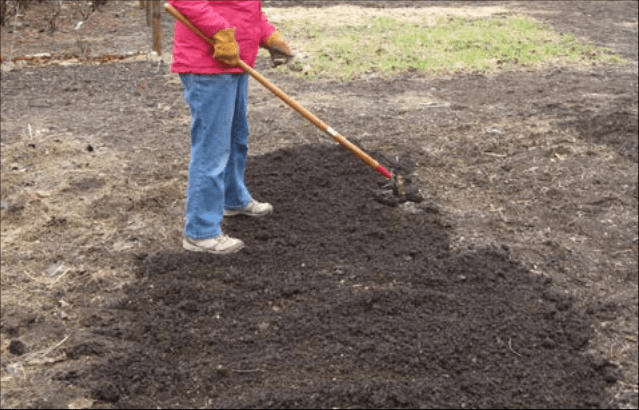
Spread the compost over the expanse to the desired depth. Wheelbarrows, v-gallon buckets, shovels and rakes are useful tools for spreading compost (Effigy 5).
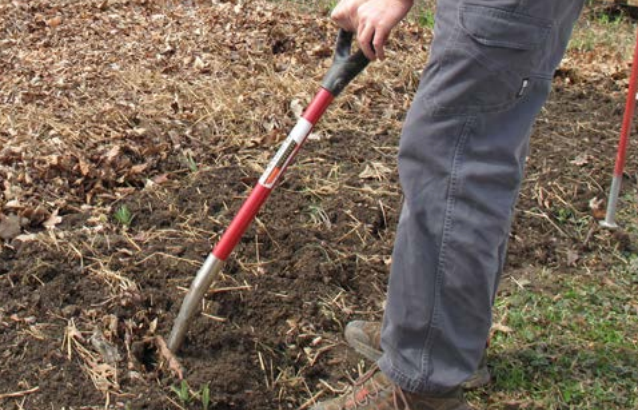
Use a digging fork, spade,or shovel to mix in the compost and other amendments. Loosening the soil decreases compaction and increases the amount of air in the soil (Effigy 6).
How to fill raised beds
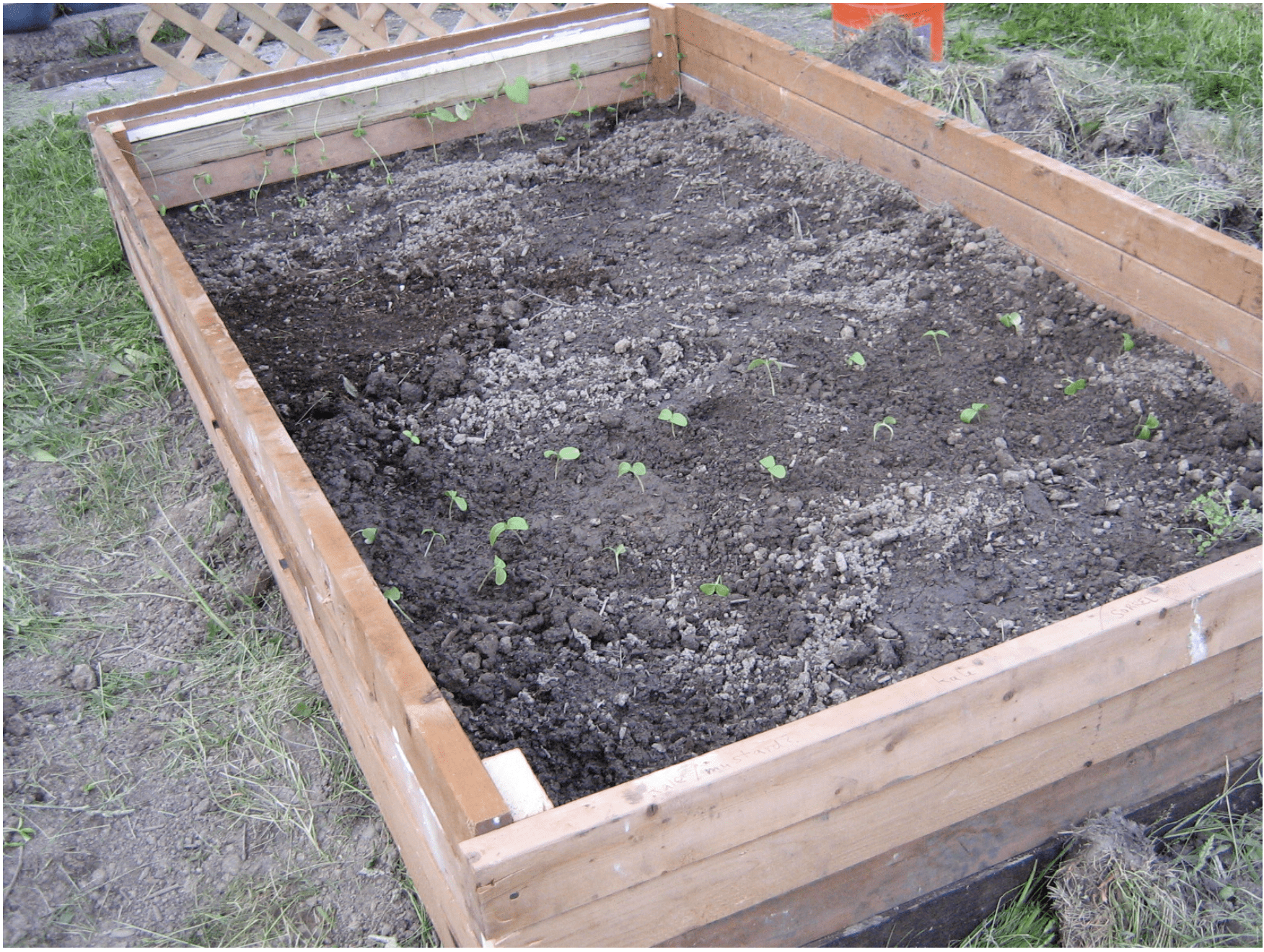
Raised beds use retaining walls to concord in soil (Effigy 7). Retaining walls for raised beds can be made from woods, bricks or like materials.
Raised beds efficiently utilise infinite past creating clearly defined paths and growing areas. You can make them into any shape.
Make wheelchair-accessible raised beds 28–34 inches tall.
Earlier you make full your raised bed, break upwardly the soil surface at the bottom of the area. Add 2–three inches of compost or soil mix and other amendments such every bit lime. Mix the added materials into the existing soil.
If you excavated soil while installing your raised beds, mix in compost and apply information technology to fill the raised beds. Add together up to 25% compost by book to fill the depth of the bed.
If your raised bed is not still filled, y'all'll need to purchase a soil mix to fill it.
Use bagged potting soil to fill up the raised bed for smaller jobs. For instance, it takes 12 1-cubic-foot bags to fill up a 3-foot-by-eight-pes bed with half-dozen inches of potting soil.
For larger jobs, buy a majority soil mix from a landscape supply company. For instance, it takes 1.7 cubic yards of soil mix to fill four raised beds (3 feet by 8 feet) with half-dozen inches of soil mix. Common bulk soil mixes include:
- 3-way mix with equal parts topsoil, sand and compost.
- Iv-manner mix with equal parts topsoil, sand, compost and lava rock or vermiculite.
- Specialty planting mixes for raised bed and container growing.
Expect your newly filled beds to compact over time as the compost in the mix farther decomposes. Refill the raised beds every bit needed.
For more information about raised beds, encounter Raised Bed Gardening, FS 270.
Landscape areas
- Add compost to soil before you install mural plants.
- Spread 3–4 inches of compost on the area you intend to plant.
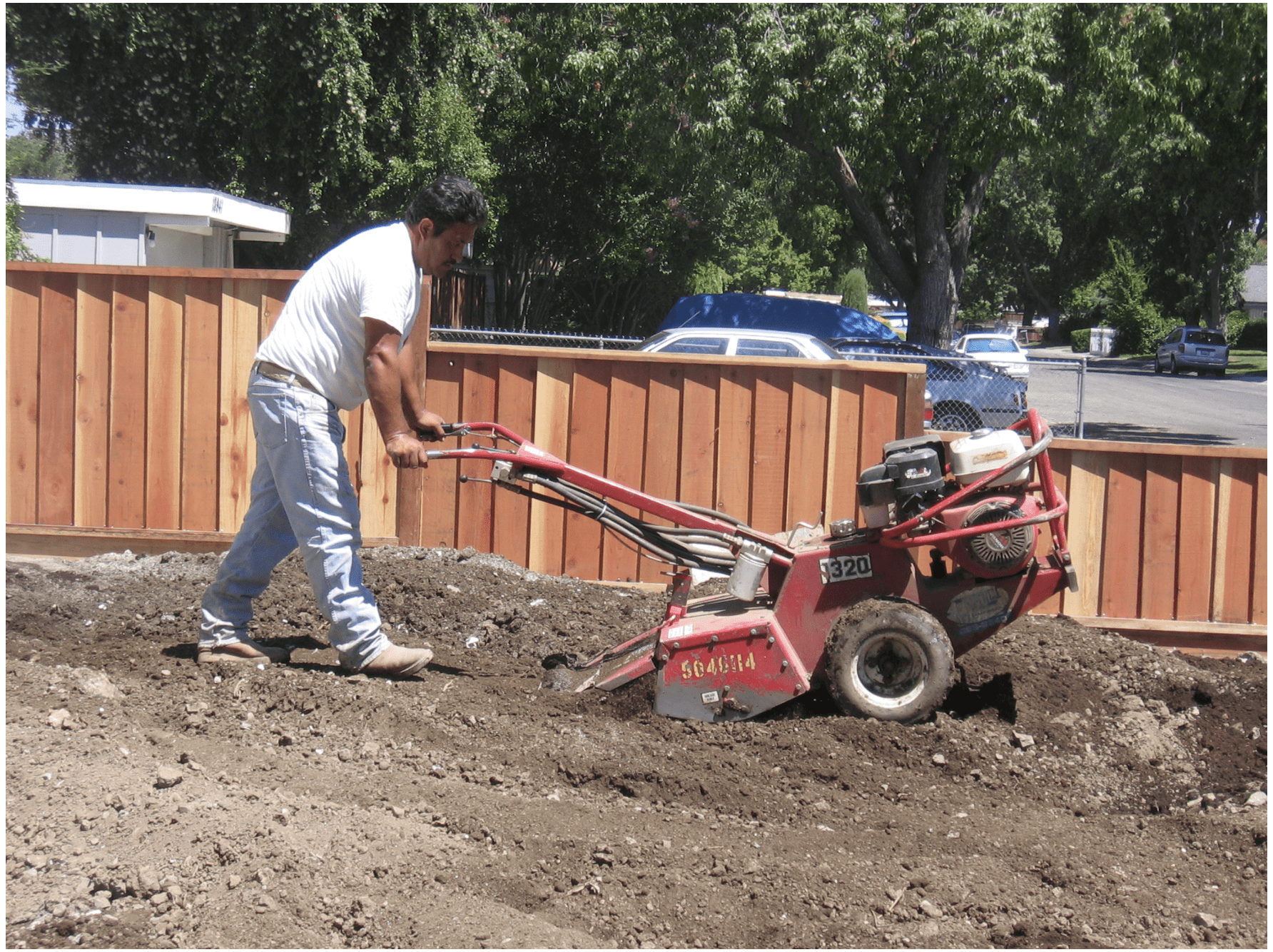
- Mix it in as deeply as possible with a fork or shovel. Or, employ a rototiller to mix the compost into the soil.
- Dig planting holes. Install plants into the amended soil.
- For large areas or compacted soil, consider using heavy equipment to prepare the site.
Spread compost over the surface area where you lot want to install new plants. Mix the compost in as deeply every bit possible. And so dig planting holes in the amended soil. Install the new plants. Figure ix shows a properly amended planting area.
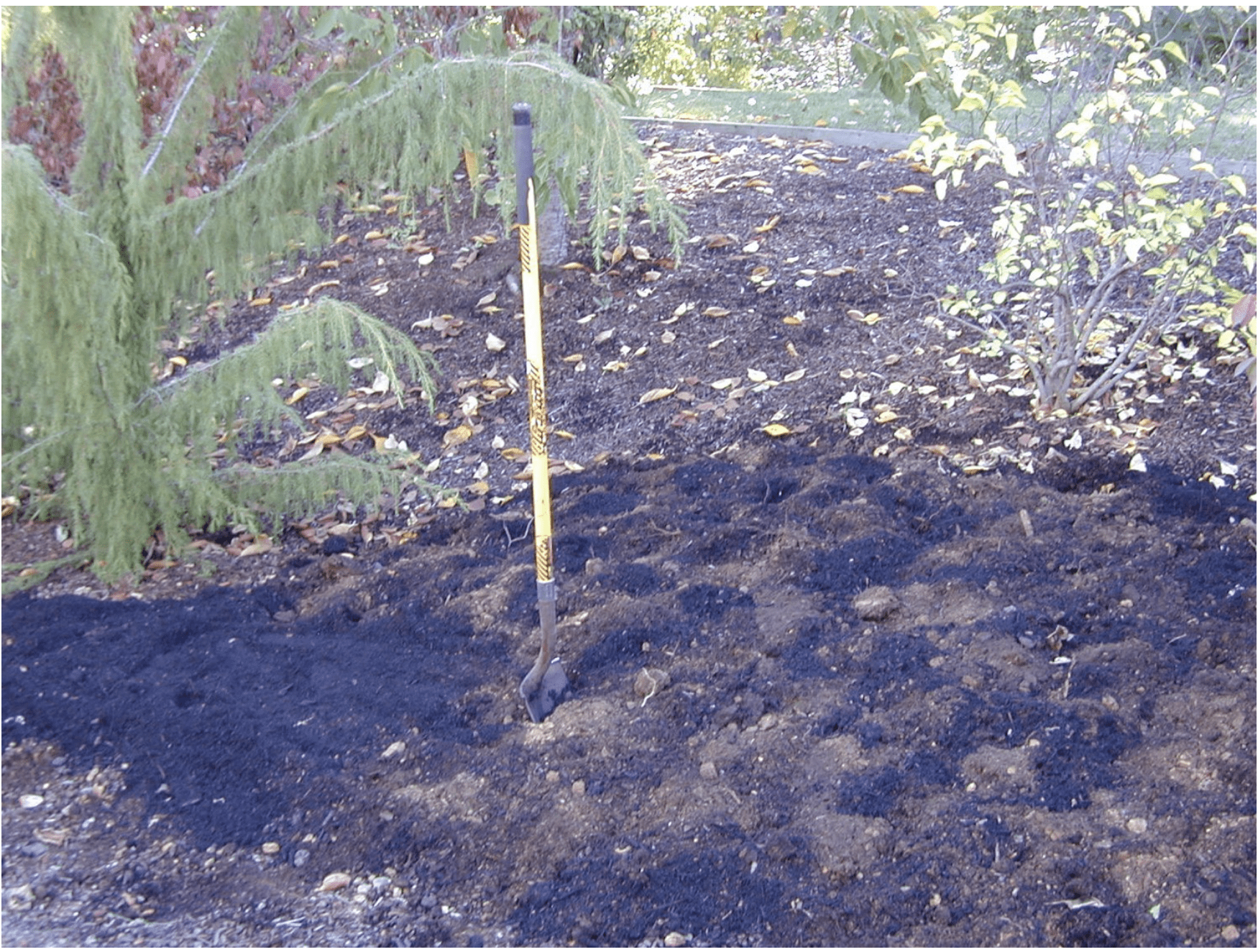
For large areas or compacted soil consider using heavy equipment.
Before digging with a tractor, locate utilities in the surface area. Visit https://digsafelyoregon.com or phone call 811 before you lot dig.
Prepare the soil the correct way and so plants thrive
With proper planning and action, you lot can ensure the successful institution of plants in your new landscape areas.
The sequence of photos beneath shows how soil amended with compost promotes healthy landscape plants:
- The soil in a landscape bed was amended with compost and mixed in with heavy equipment.
- Plants were installed in the fall. They were well watered at that time.
- Then, without any additional irrigation or fertilizer, the drought-hardy plants grow into the space over time.
Mix compost into the soil equally deeply as possible (Effigy 10A). Add about ⅓ compost by volume. And then, if you can dig 2 feet deep with a tractor, yous could add compost upwards to one foot deep. Contain the compost into the existing soil (Figure 10B).
The mural bed is now ready for planting. The surface was raked. Edging was installed between the planting bed and pathway (Figure 10C).
Landscape plants were installed in fall. The plants were watered at the time of planting as shown in Effigy 10D.
Mulch was practical on the surface. Woody mulch helps to conserve water in the soil. It also helps keep weed seeds from germinating (Figure 10E).
After a yr, the plants accept started to make full in the surface area without whatever additional irrigation or fertilizer (Figure 10F). When the soil is prepared the right fashion, drought-tolerant plants thrive with minimal ongoing inputs in areas with adequate rainfall.
Lawns
New lawn installation
Use compost to better the growing atmospheric condition for lawns. Calculation compost helps to improve soil construction.
The get-go footstep if you programme to install a new lawn is to apply compost over the worksite and mix information technology in with a rake or rototiller. A thin layer of compost may be used as mulch afterwards seeding turf. Add i–2 inches compost to the surface area as yous prepare the soil (Figure 11). Rototill the compost into the soil. Don't overtill the soil.
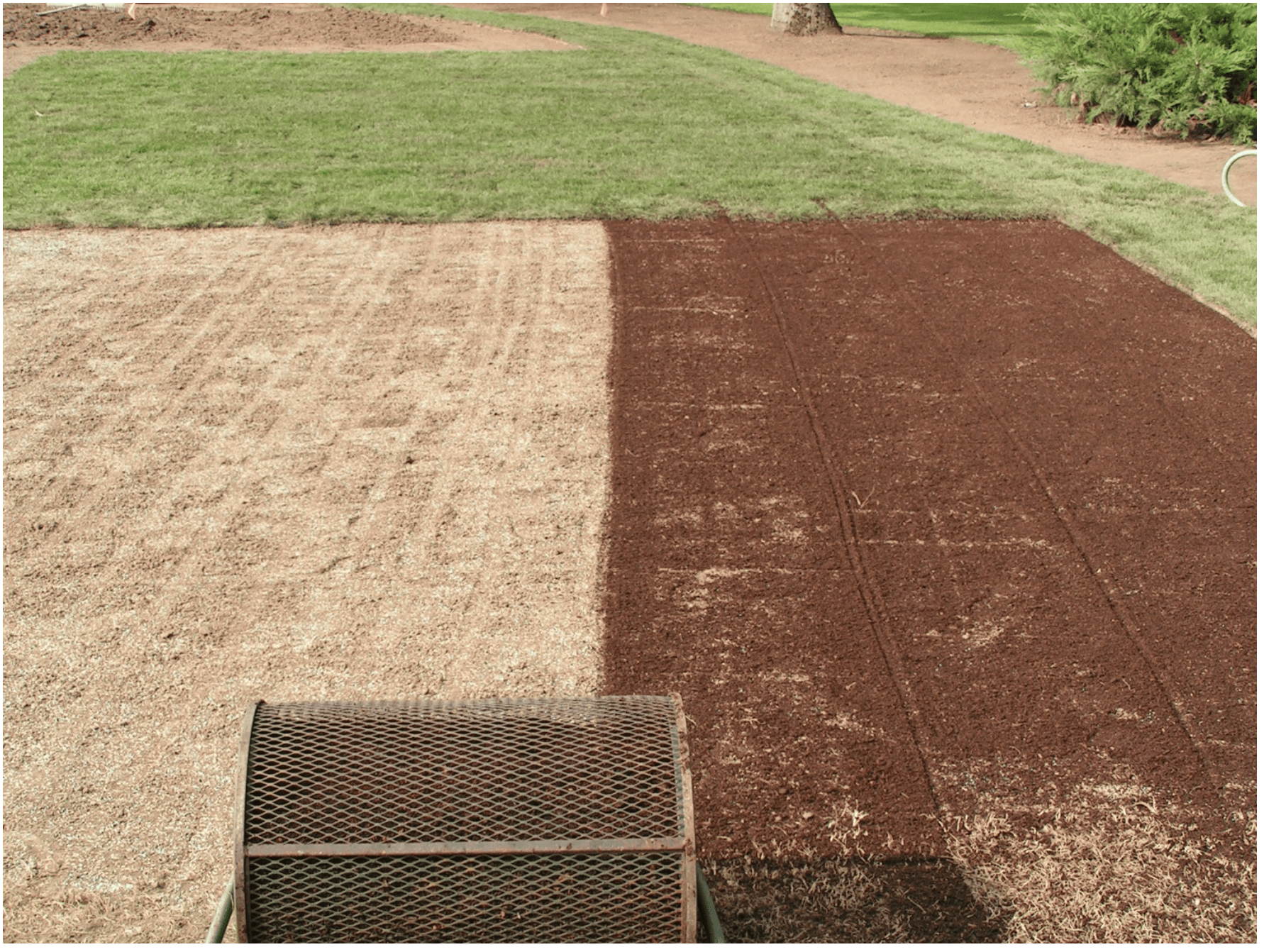
Yous can use a sparse layer of compost as a mulch after seeding. Mulch helps to keep seeds moist during sprouting and early growth.
Figure 12 shows a wire mesh cylinder or mulch roller tool being used to encompass a newly seeded lawn expanse with mulch. Information technology'south filled with mulch and used to apply a thin layer of mulch to the surface. This tool is available at tool rental centers.
For more information, encounter Practical Backyard Institution and Renovation.
Compost for existing lawns
Topdressing is adding compost on top of an existing lawn. Adding compost often improves soil atmospheric condition promoting grass growth. Spread new lawn seed over the expanse before or subsequently applying compost.
Tardily bound and early fall are the best times of year for this work. New seeds will sprout quickly when the soil temperature is above 60 degrees Fahrenheit.
Follow the steps below to top dress your lawn with compost:
- Outset, mow the lawn brusque. Use a bagging mower or a rake to collect the cut grass (Figure 13). Even better, utilise a dethatching machine to sparse the grass. The goal is to expose the soil surface for the next steps.
- Use a core aerating machine on the lawn expanse (Figure 14). The car pokes holes in the soil surface and leaves the plugs of soil on the surface. Break up the plugs with a rake.
- Spread compost i-quarter to one-half-inch deep across the lawn area (Figure 15). The compost will fill in the holes left by core aeration. Spread lime and Northward-P-Thou fertilizer at this time.
- Use a seeder to spread seed over the unabridged lawn surface area (Figure 16). Applying seed over an existing lawn (overseeding) will help fill in gaps in the backyard to create a dense stand of turf.
- Afterwards you lot apply lawn seed, apply h2o to the seeded surface area. Keep the seedbed evenly moist until the seeds sprout. Be ready to water three to four times per day to go along the soil and seeds from drying out.
For more than information, run across Applied Lawn Intendance for Western Oregon, EC 1521, and Turfgrass Maintenance Calendar for Central Oregon.
Before you lot buy majority compost or soil mix
Earlier yous purchase a majority load of compost or soil mix, contact the vendor.
- Ask how they handle herbicide contamination risk.
- Accept they reduced potential sources of contagion?
- Practice they perform bioassay tests on their finished compost product for herbicide residues? Bioassay tests use plants such every bit peas grown in the compost or soil mix to check for abnormal growth caused by herbicide contagion. Basic lab testing might not indicate herbicide contagion.
Avert problems with compost
Herbicide-contaminated compost and soil mix
Compost and soil mix products sometimes contain herbicide residue. This balance tin can impairment sure vegetable, fruit and flower crops. The residue probable comes from contaminated hay, grass clippings or manure. These materials may make their mode into the regional composting organisation.
Exist aware of the symptoms
Gardeners and landscapers should be enlightened of symptoms of found injury from herbicides.
Herbicide damage from contaminated compost or soil mix is caused past growth regulator herbicides. These herbicides more than often touch on broadleaf plants. Expect for distorted or cupped leaves. The damage occurs in new growth, including the end of the shoots (Figure 17).
See Herbicide-Contaminated Compost and Soil Mix: What You Should Know — and What Y'all Can Exercise Most It.


Adding also much compost
When as well much compost is added to the soil, plants growing in the amended area fail to thrive. Plants often look stressed, stunted or burned growing in soil with as well much compost.
Plants' response to besides much compost looks similar to fertilizer burn down. Figure 18 shows a chrysanthemum growing in a container with too much fertilizer. The leaves look burned and purple.
If too much compost is added to the soil, nutrients including phosphorus and potassium can leach by the root zone and motility beyond your garden. The nutrients may leach into surface and ground water from rain or irrigation. Nutrients in surface h2o supports algae growth and low-oxygen water.
The surface h2o shown in the swimming in Effigy 19 is covered with a thick layer of algae. Algae growth often results from too much nutrients. Excess nutrients in surface waters often come from fertilizer. Adding too much compost to soil can accept a similar impact on surface h2o and groundwater.

Compost resource
- Bong, N., D. Sullivan, 50. Brewer, J. Hart. 2017. Improving Garden Soils with Organic Matter, EC 156, Corvallis, Oregon: Oregon Land University Extension Service.
- Edmunds, B. 2020. Raised Bed Gardening. FS270, Corvallis, Oregon: Oregon State University Extension Service.
- Landschoot, P. 1997. Using Composts to Improve Turf Performance, University Park, Pennsylvania: Penn State Extension
- Starbuck, C. J. 2020. Making and Using Compost. g6956, Columbia, Missouri: University of Missouri Extension.
- Traunfeld, J. 2019. Soil to Fill Raised Beds. College Park, Maryland: University of Maryland Extension.
- Cooperative Extension Fresno Canton. 2020 Accessible Gardening.UC Extension Fresno Canton. Fresno, California: Academy of California Agriculture and Natural Resources.

Source: https://extension.oregonstate.edu/pub/em-9308
0 Response to "what to expect when using compost in garden"
Post a Comment